
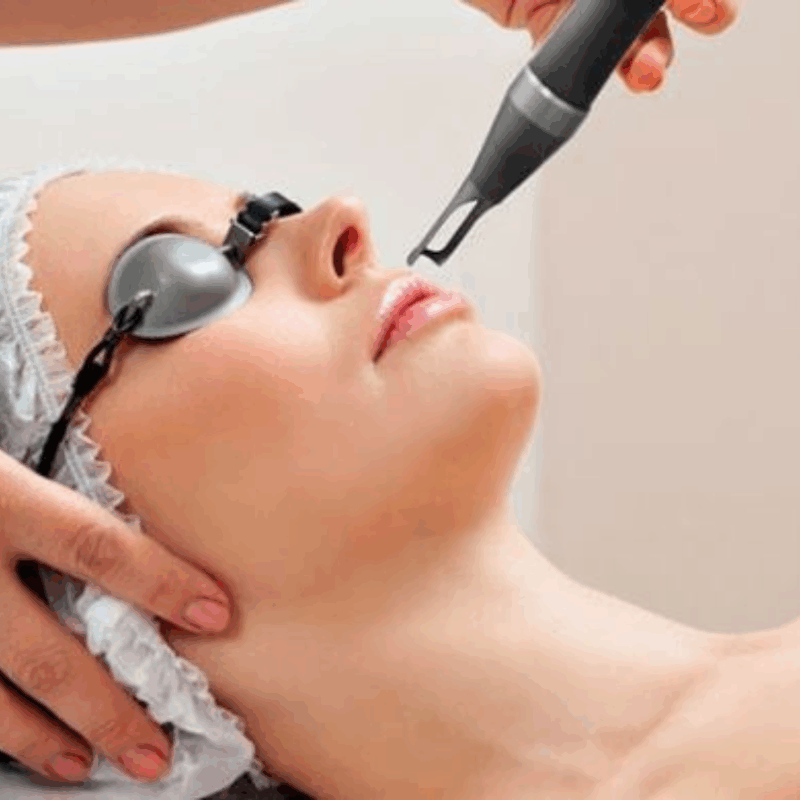
What skin concerns can this treatment help with?
Picosecond laser is effective for a wide range of concerns, including pigmentation, sun damage, melasma, freckles, acne marks, uneven skin tone, enlarged pores, and overall skin rejuvenation.
Is the treatment painful?
Most clients describe the sensation as a light snapping feeling on the skin.
A numbing cream can be applied beforehand to ensure your comfort during the treatment.
Is there any downtime?
Downtime is minimal. You may experience slight redness or sensitivity for 24–48 hours.
Some clients may also notice mild dryness or a “sandpaper” texture as the skin renews.
Will the pigmentation turn darker after treatment?
Yes — it’s completely normal for treated pigmentation to appear darker temporarily after a Picosecond laser session.
This is called “pigment darkening” and it’s a sign that the treatment is working.
Why does this happen?
The laser breaks down pigment into tiny particles. As this process occurs, the pigment can rise to the surface, making it appear darker before it fades.
How long does it last?
- Darkening usually appears within 1–3 days after treatment
- It typically fades within 7–14 days as your body clears the pigment
When will I see results?
You may notice brighter, clearer skin within a few days.
Pigmentation will gradually fade over 1–2 weeks as your body naturally clears the pigment.
Is it safe for all skin types?
Yes, Picosecond laser is generally safe for most skin types, including darker skin tones, as it uses less heat than traditional lasers.
A consultation is recommended to ensure the treatment is suitable for your skin.
Can it treat melasma?
Yes, however melasma can be complex. It often requires multiple sessions, along with proper skincare and strict sun protection, to achieve and maintain results.
Will the pigmentation come back?
The treatment removes existing pigmentation, but new pigmentation can develop if the skin is exposed to sun or other triggers.
Daily SPF and good skincare are essential to maintain your results.
Can I wear makeup after treatment?
It’s best to avoid makeup for 24 hours to allow your skin to recover. After that, you can return to your normal routine.
What should I avoid after treatment?
- Sun exposure and tanning
- Hot showers, saunas, and intense exercise for 24–48 hours
- Active skincare (retinol, AHAs/BHAs) for a few days
- Picking or scrubbing the treated area
Is there anything I should do before my appointment?
- Avoid sun exposure and tanning for at least 1–2 weeks
- Stop using active ingredients (retinol, AHAs/BHAs) a few days prior
- Arrive with clean, makeup-free skin
Can I combine this with other treatments?
Yes, this treatment can be combined with other skin treatments depending on your goals.
Your therapist will recommend a personalised treatment plan during your consultation.
How many treatments will I need?
This depends on your skin concern, how deep the pigmentation is, and how your skin responds. As a general guide:
- Light pigmentation (freckles, mild sun spots): 1–3 sessions
- Moderate pigmentation (sun damage, acne marks): 3–5 sessions
- Melasma or deeper pigmentation: 4–8+ sessions (maintenance may be needed)
- Skin rejuvenation (glow, pores, fine lines): 3–6 sessions
Most treatments are spaced 2–4 weeks apart for best results.
You may start seeing improvement after your first session, but results build gradually as your body clears pigment and stimulates new collagen.
A consultation is recommended to create a personalised treatment plan tailored to your skin.